

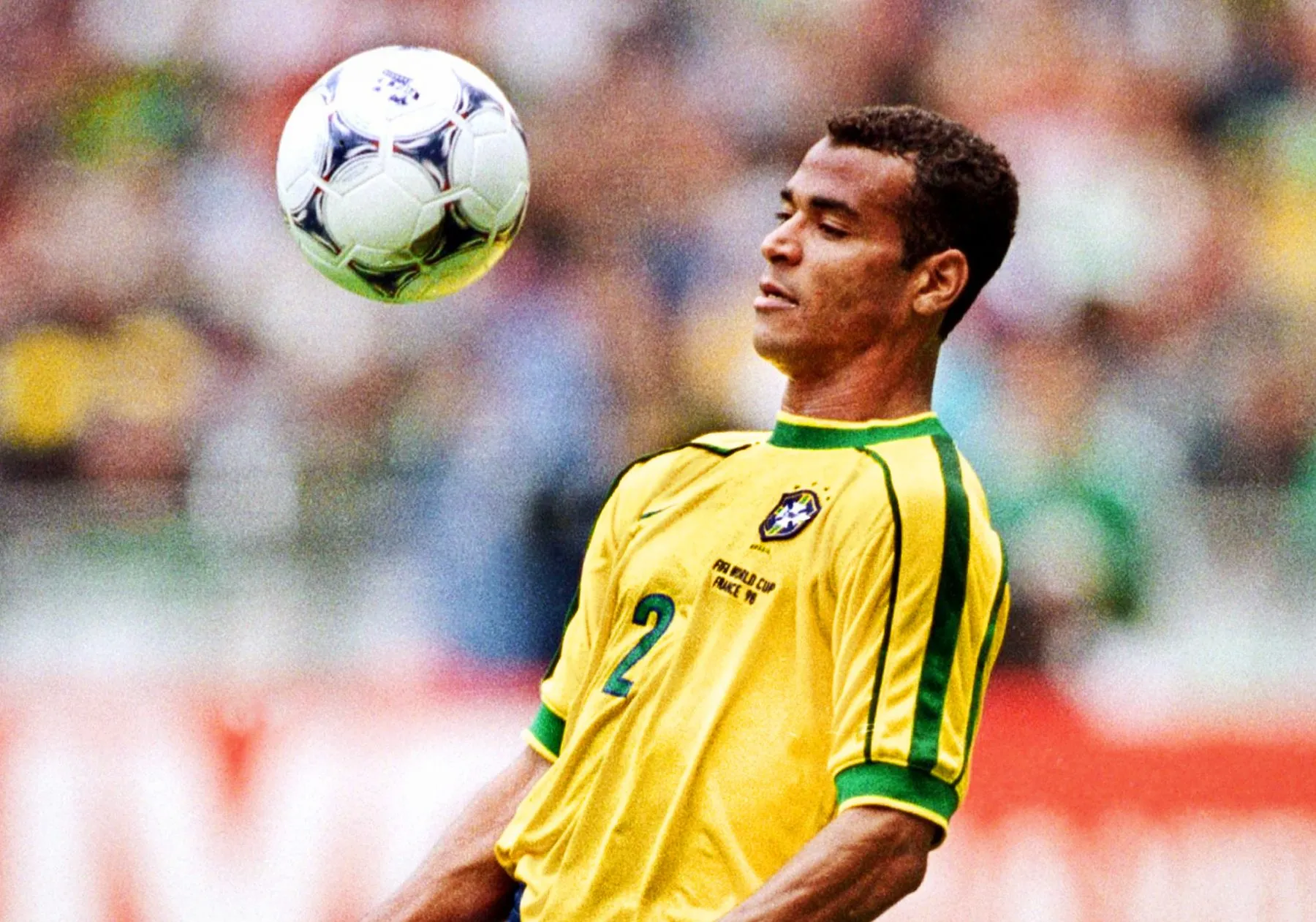
When it comes to the greatest footballers of all time, few can match the legacy of Cafu, a Brazilian legend who revolutionized the role of the right-back. With his trademark speed, stamina, and unmatched work ethic, Cafu set new standards for full-backs, turning defense into a springboard for attack. His career, spanning nearly two decades, saw him become one of the most decorated players in football history, with both club and international successes that still resonate in the football world today.
A Humble Beginning
Born Marcos Evangelista de Morais on June 7, 1970, in São Paulo, Cafu grew up in a poor neighborhood, dreaming of football stardom. His rise to prominence wasn’t straightforward. After being rejected by several clubs in his youth, he finally broke through with São Paulo FC in 1990, where he quickly showcased his attacking prowess, stamina, and versatility.
At São Paulo, Cafu was part of the legendary team coached by Telê Santana, where he won back-to-back Copa Libertadores titles in 1992 and 1993, and the prestigious Intercontinental Cup. His performances earned him a call-up to the Brazilian national team, marking the beginning of his international career.
International Glory with Brazil
Cafu’s international career is where his name truly became synonymous with greatness. He made his debut for Brazil in 1990, but it was during the 1994 World Cup in the United States that he announced himself on the global stage. Although he began the tournament as a substitute, an injury to teammate Jorginho during the final gave Cafu a chance to shine. Brazil went on to win the World Cup, and Cafu earned his first taste of international glory.
He reached the pinnacle of his career as Brazil’s captain during the 2002 FIFA World Cup, leading a star-studded squad that included players like Ronaldo, Rivaldo, and Ronaldinho. Cafu became the first player in history to appear in three consecutive World Cup finals (1994, 1998, and 2002), and he famously lifted the trophy after Brazil’s 2-0 victory over Germany. This cemented his place as one of football’s greatest icons.
In total, Cafu earned 142 caps for Brazil, making him the most capped player in the nation’s history. His international achievements also include two Copa América titles (1997, 1999) and a FIFA Confederations Cup victory in 1997.
European Club Success
While Cafu made his name in Brazil, he solidified his status as a global star during his time in Europe. In 1997, Cafu joined AS Roma, where he became a key figure in the club’s resurgence. His ability to balance defensive duties with marauding runs up the right flank made him one of Serie A’s most dangerous players. Cafu helped Roma win the Serie A title in the 2000-2001 season, the club’s first league triumph in nearly two decades.
In 2003, Cafu transferred to AC Milan, where he enjoyed even greater success. At Milan, he won another Serie A title and added a prestigious UEFA Champions League trophy to his cabinet in 2007, defeating Liverpool in the final. His time at Milan was marked by consistency and professionalism, as he continued to perform at the highest level well into his mid-30s.
Cafu’s Style: The Prototype of the Modern Full-Back
What made Cafu so unique was his ability to combine defensive solidity with offensive creativity. He was an attacking full-back before it became common practice, constantly bombing forward to support his team’s attack while still maintaining his defensive responsibilities. His incredible fitness levels allowed him to run up and down the pitch for the full 90 minutes, earning him the nickname “Il Pendolino” (The Express Train) during his time in Italy.
Cafu’s skill set has influenced generations of full-backs who aspire to play a more dynamic role on the field, turning defense into the first line of attack. Players like Dani Alves, Trent Alexander-Arnold, and Achraf Hakimi owe much of their approach to Cafu’s trailblazing style.
Post-Retirement Legacy
After retiring from professional football in 2008, Cafu remained involved in the sport, often serving as a global ambassador for the game and working with charitable foundations, including his own Cafu Foundation, which aims to provide opportunities for underprivileged children in Brazil.
In recognition of his incredible contributions to football, Cafu has been honored by FIFA and other organizations multiple times. He continues to be a role model not just for footballers, but for anyone striving to overcome adversity and reach the top.
Conclusion: A Lasting Impact on Football
Cafu’s legacy is that of a player who redefined his position and embodied the very best of Brazilian football: skill, flair, and resilience. His ability to excel both defensively and offensively revolutionized the role of the full-back, and his leadership on and off the pitch has inspired countless fans and players alike. With two World Cup wins, multiple club titles, and a reputation as one of the game’s all-time greats, Cafu’s name will forever be etched in football history as a true legend.