

“`html
Champions League: Where Legends Rise and Empires Fall
Introduction
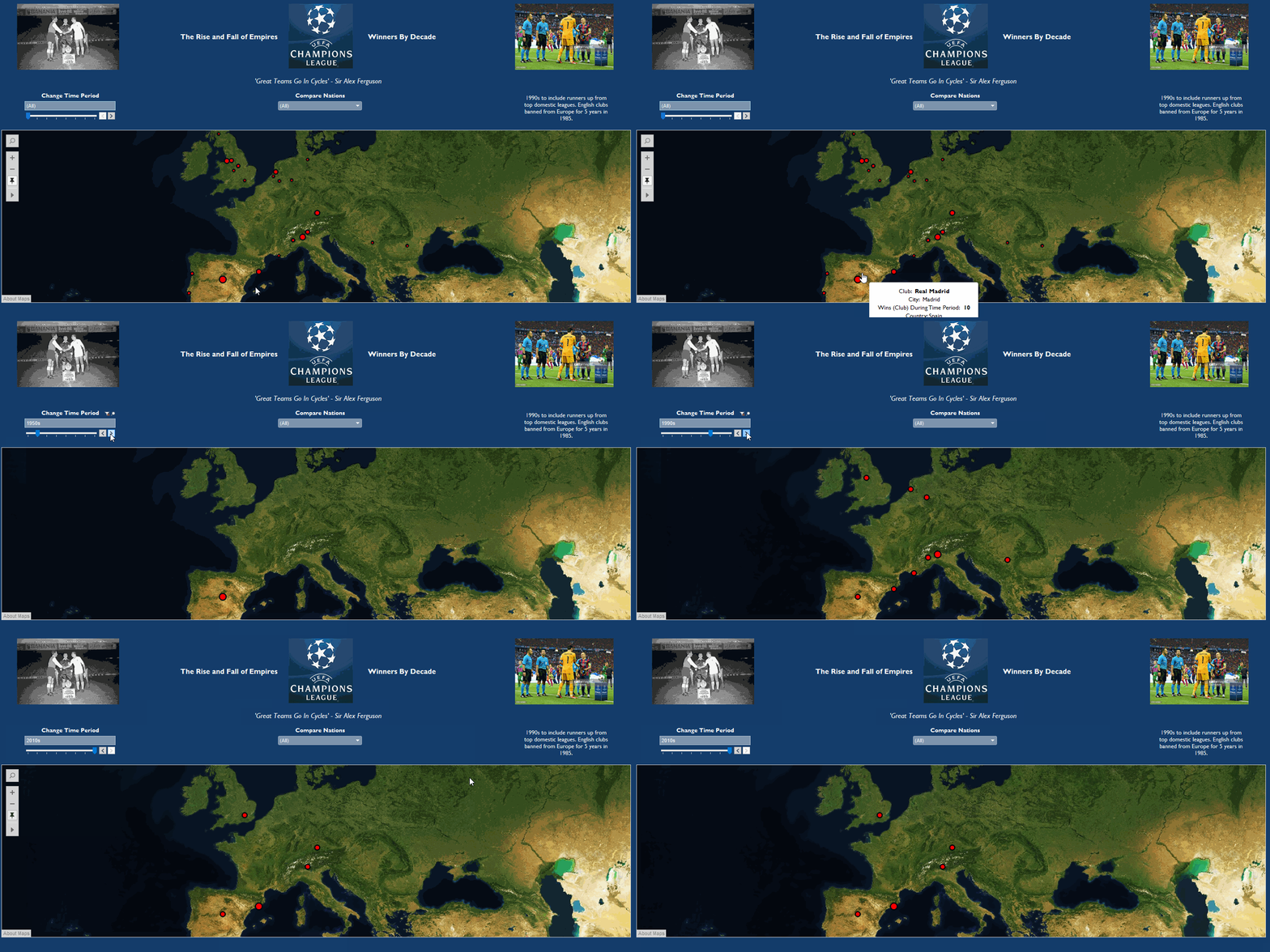
The Champions League. Just the name conjures images of breathtaking goals, nail-biting finishes, and the electric atmosphere of stadiums packed to the rafters. It’s more than just a football tournament; it’s a crucible where legacies are forged, reputations are shattered, and history is written in golden ink. It’s a place where legends rise to immortality and empires, built on years of dominance, can crumble in a single, fateful night.
But what is it about this competition that makes it so compelling, so dramatic, and so utterly captivating? And what happens when the seemingly invincible giants of European football stumble on this grandest of stages? Let’s dive in.
The High Stakes of Glory and Disappointment
The Champions League is a double-edged sword. The immediate reward for success is obvious: lifting the trophy, the adulation of fans, and a place in footballing folklore. But the impact stretches far beyond the final whistle.
Short-Term Impact:
Winning the Champions League can catapult a team into instant superstardom. Sponsors flock, player values skyrocket, and the club’s brand becomes a global phenomenon. Just look at Chelsea’s transformation after their unexpected triumph in 2012. They went from a club chasing European glory to one that had achieved it, instantly raising their profile and financial clout. Similarly, for players, a Champions League medal can significantly boost their individual accolades and marketability.
However, the short-term consequences of failure can be equally devastating. Crashing out early can lead to managerial sackings, player unrest, and a dent in the club’s reputation. Teams like Manchester United, historically a force in Europe, have experienced the sting of early exits, leading to periods of instability and self-doubt.
Long-Term Impact:
The long-term effects are even more profound. Winning the Champions League can cement a club’s place among the European elite for generations. It can attract top talent, inspire future generations of players, and create a lasting legacy of success. Real Madrid’s dominance in recent years is a testament to this – they’ve become a magnet for the world’s best players, knowing that they have a genuine chance of lifting the trophy in white.
On the flip side, repeated failures can have a corrosive effect on a club’s ambitions. It can lead to a cycle of underachievement, making it harder to attract top players and compete with the established giants. Teams like Arsenal, despite their domestic success, have struggled to consistently make their mark in Europe, hindering their overall growth and perception.
When Empires Fall: Identifying the Cracks
So, what causes these empires to crumble on the Champions League stage? Here are some common pitfalls:
- Complacency and Lack of Adaptation: Resting on past laurels is a recipe for disaster. Teams that fail to evolve their tactics, adapt to their opponents, or maintain their hunger for success are often caught out. Think of Barcelona’s decline after their dominant era under Pep Guardiola. They struggled to reinvent themselves, and other teams eventually figured out how to nullify their style of play.
- Over-Reliance on Individual Brilliance: While star players are essential, a team built solely around one or two individuals is vulnerable. If those players are off their game, injured, or effectively marked out of the match, the entire system can collapse. Paris Saint-Germain’s continuous pursuit of Champions League glory, despite possessing some of the world’s best players, highlights this issue. They often lack the tactical flexibility and team cohesion needed to overcome adversity.
- Psychological Weakness: The pressure of the Champions League can be immense. Teams that lack mental fortitude, experience in high-pressure situations, or a strong team spirit are likely to falter when the stakes are highest. Teams like Tottenham Hotspur, despite reaching the final in 2019, have often struggled to replicate their domestic form in Europe due to psychological barriers.
- Tactical Naivety: Being outmaneuvered tactically by a more astute manager can be a fatal blow. Over the two legs of a knockout tie, the ability to adapt, anticipate, and exploit weaknesses is crucial. Managers like Jurgen Klopp and Pep Guardiola have consistently demonstrated their tactical prowess, leading their teams to Champions League success.
Rebuilding and Reigniting: Practical Solutions for Success
So, what can teams do to avoid the pitfalls and build a Champions League-winning formula? Here are some actionable solutions:
- Embrace Continuous Evolution: Constantly adapt your tactics, formations, and player roles. Study your opponents meticulously and identify their weaknesses. Look at how teams like Bayern Munich consistently evolve their game plan, ensuring they stay ahead of the curve.
- Foster a Culture of Teamwork and Resilience: Build a team where every player is committed to the collective goal. Develop a strong team spirit and mental fortitude to overcome adversity. Atletico Madrid, under Diego Simeone, is a prime example of a team built on unwavering teamwork and resilience.
- Invest in Tactical Intelligence: Hire a manager with a sharp tactical mind and the ability to analyze opponents effectively. Equip your coaching staff with the resources they need to provide detailed scouting reports and game plans.
- Develop a Strong Youth Academy: Invest in your youth academy to develop homegrown talent that understands the club’s culture and values. This not only provides a sustainable source of players but also fosters a stronger connection with the fans. Ajax Amsterdam’s success in nurturing young talent is a testament to the power of a well-run youth academy.
- Manage Pressure and Expectations: Create an environment where players feel supported and empowered, not overwhelmed by pressure. Provide them with the mental skills training they need to perform at their best in high-stakes situations. Liverpool’s success under Jurgen Klopp is partly attributed to his ability to create a positive and supportive environment for his players.
No single solution fits every team. Here are some alternative approaches to consider:
- The “Moneyball” Approach: Focus on data-driven decision-making to identify undervalued players and optimize your squad. This can be particularly effective for teams with limited financial resources.
- The “Total Football” Philosophy: Emphasize fluid movement, positional versatility, and a high-pressing style of play. This requires a highly skilled and adaptable squad.
- The “Defensive Fortress” Strategy: Build a solid defensive foundation and rely on counter-attacking opportunities. This can be effective against stronger opponents.
Conclusion: A Journey, Not a Destination
The Champions League is a relentless test of skill, strategy, and mental fortitude. It’s a competition where legends are made, and empires can crumble. But failure isn’t the end; it’s an opportunity to learn, adapt, and come back stronger. By embracing continuous evolution, fostering a culture of teamwork, investing in tactical intelligence, and managing pressure effectively, teams can increase their chances of success and etch their names into Champions League history.
Remember, the journey to the top is rarely linear. There will be setbacks, challenges, and moments of doubt. But with the right mindset, the right strategies, and unwavering determination, any team can rise to the occasion and achieve their Champions League dreams. So, go out there, build your empire, and strive for greatness. The Champions League awaits.
“`