

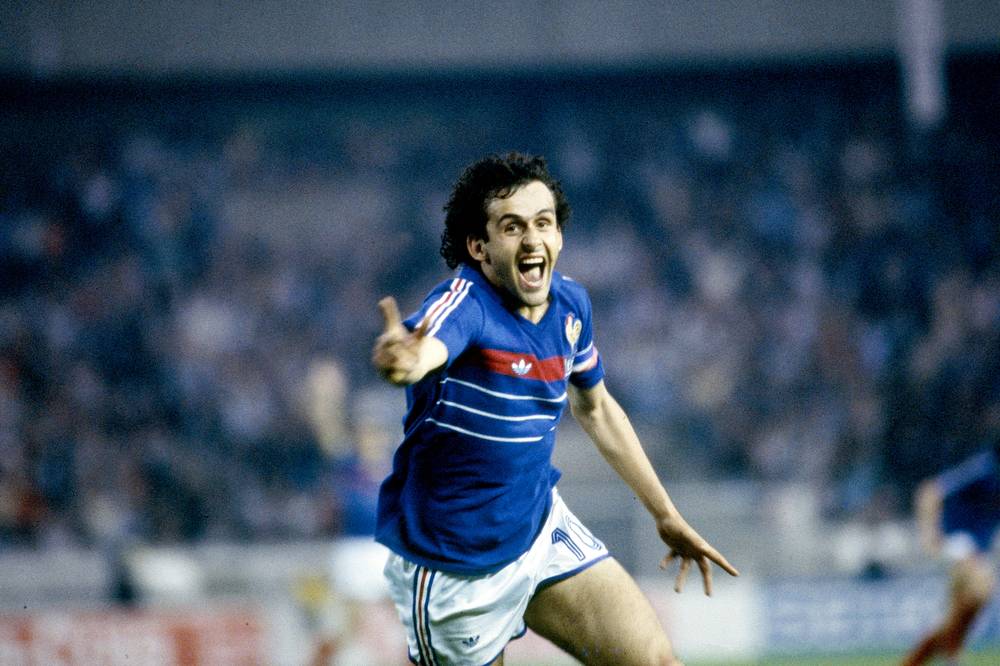
Michel Platini: The Maestro of French Football
Michel Platini is universally recognized as one of the greatest footballers in history, a maestro who redefined the role of the attacking midfielder with his elegance, vision, and goal-scoring prowess. His illustrious career spanned from the 1970s to the 1980s, during which he achieved remarkable success both at the club and international levels. Beyond his playing days, Platini also made significant contributions to the sport as an administrator, leaving a lasting impact on football’s global landscape.
Michel François Platini was born on June 21, 1955, in Jœuf, France. Growing up in a football-loving family, with his father an amateur player and later a coach, Platini’s path to the sport seemed almost predestined. He began his professional career with AS Nancy in 1972, where he quickly established himself as a prodigious talent. His exceptional playmaking abilities, combined with a knack for scoring goals, caught the attention of bigger clubs.
Club Career Highlights
In 1979, Platini moved to AS Saint-Étienne, one of France’s most prestigious clubs at the time. He continued to impress, leading Saint-Étienne to a Ligue 1 title in 1981. However, it was his move to Juventus in 1982 that truly elevated his career to legendary status.
At Juventus, Platini won numerous domestic and international titles, including two Serie A titles and the prestigious European Cup in 1985. He was the top scorer in Serie A for three consecutive seasons (1982-1985) and won the Ballon d’Or three times in a row (1983, 1984, and 1985), a testament to his dominance in European football. Platini’s elegance on the ball, precise passing, and lethal free-kick ability made him a formidable force on the field.
International Glory with France
Platini’s international career with the French national team is equally illustrious. He earned his first cap in 1976 and soon became the team’s lynchpin. His crowning achievement came at the 1984 UEFA European Championship, hosted by France. Platini captained Les Bleus to their first major international title, scoring an incredible nine goals in the tournament, a record that still stands. His performances earned him the Player of the Tournament award and solidified his status as a footballing icon.
Transition to Administration
After retiring from playing in 1987, Platini transitioned into football administration and coaching. He briefly managed the French national team from 1988 to 1992 before moving on to administrative roles. Platini played a key role in organizing the 1998 FIFA World Cup in France, which was a resounding success.
In 2007, he was elected president of UEFA, where he served until 2015. During his tenure, Platini introduced several reforms aimed at promoting financial fair play and enhancing the competitiveness of European football. His presidency, however, was marred by controversy, leading to a ban from football activities due to an ethics violation. Despite this setback, his contributions to football administration remain significant.
Legacy and Influence
Michel Platini’s legacy as a footballer is unparalleled. He is widely regarded as one of the greatest midfielders of all time, known for his creativity, intelligence, and goal-scoring ability. His impact on French football is profound, having inspired countless young players and helping to elevate the national team to new heights.
Off the field, Platini’s administrative efforts have left a lasting impact on the governance of European football. His vision for financial fair play and emphasis on integrity and transparency have shaped the modern landscape of the sport.
Personal Life
Platini is known for his love of the game and his dedication to promoting football’s values. Despite the controversies that marked his later years in administration, he remains a respected figure in the football community. Platini continues to be involved in various charitable activities and initiatives aimed at supporting youth football development.
Michel Platini’s journey from a small town in France to the pinnacle of football greatness is a testament to his extraordinary talent, determination, and passion for the game. As a player, he dazzled fans with his skill and vision, leaving an indelible mark on the sport. As an administrator, he sought to shape the future of football with a focus on fairness and integrity. Platini’s legacy is one of brilliance, both on and off the pitch, making him a true legend of the beautiful game.