

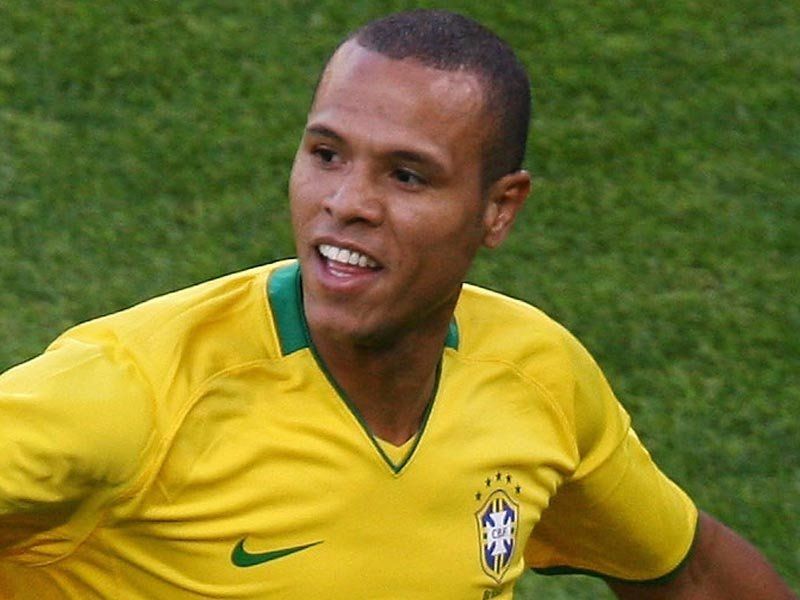
Luís Fabiano, a name synonymous with Brazilian football, is celebrated for his remarkable career as a professional striker. Known for his powerful shots, aerial prowess, and ability to find the back of the net, Fabiano has left an indelible mark on the sport both in Brazil and internationally.
Early Life and Career Beginnings
Born on November 8, 1980, in São Paulo, Brazil, Luís Fabiano began his football journey at a young age. He started playing in local clubs before joining the youth ranks of the prestigious São Paulo FC. His talent quickly became evident, and he made his professional debut with São Paulo in 1997. During his time at the club, Fabiano developed into a formidable striker, showcasing his goal-scoring abilities and helping the team secure multiple titles.
Rise to Prominence
Fabiano’s career took off during his initial spell at São Paulo, where he became a fan favorite. He played a crucial role in helping the team win the Campeonato Brasileiro Série A in 2000 and 2003. His performances caught the attention of European clubs, leading to a transfer to Europe in 2004 when he joined FC Porto.
At Porto, Fabiano continued to hone his skills and further established himself as a top striker. His time in Portugal was marked by success, winning the Primeira Liga and the Taça de Portugal. However, seeking more playing time and a more prominent role, he moved to Spain in 2005, signing with Sevilla FC.
Success in Europe with Sevilla FC
Luís Fabiano’s most successful period came during his time with Sevilla FC, where he played from 2005 to 2011. He quickly became a key player for the team, forming a lethal partnership with fellow striker Freddy Kanouté. Fabiano’s goal-scoring prowess helped Sevilla achieve remarkable success, including winning the UEFA Cup (now known as the UEFA Europa League) in 2006 and 2007, as well as the Copa del Rey in 2010.
In the 2009-2010 season, Fabiano emerged as one of the top scorers in La Liga, earning recognition for his exceptional skills and ability to perform in high-pressure situations. His performances at Sevilla solidified his reputation as one of the best strikers in Europe, and he became the club’s all-time leading goal scorer at that time.
International Career
Luís Fabiano also had a significant international career with the Brazilian national team. He made his debut in 2002 and was part of the squad that won the FIFA World Cup that year, although he did not play in the tournament. He became a regular in the national team starting from 2003 and represented Brazil in several international tournaments, including the Copa América and the FIFA World Cup.
One of his most memorable moments came during the 2010 World Cup in South Africa, where he scored two goals in Brazil’s opening match against North Korea. His performance in the tournament helped Brazil reach the quarter-finals, showcasing his ability to perform on the world stage.
Later Career and Retirement
After his successful stint in Spain, Fabiano returned to Brazil, rejoining São Paulo FC in 2011. He continued to play at a high level, contributing to the club’s successes. In 2014, he briefly played for the Brazilian club Atlético Mineiro before retiring from professional football in 2016.
Post-retirement, Fabiano has remained involved in football, taking on various roles, including coaching and mentoring young players. His experience and insights have been invaluable for aspiring footballers in Brazil, as he shares his journey and knowledge of the game.
Legacy and Impact
Luís Fabiano’s legacy in football is marked by his incredible goal-scoring ability, versatility as a striker, and contributions to both club and country. He is remembered as one of Brazil’s most prolific forwards, leaving a lasting impact on the clubs he played for, particularly Sevilla and São Paulo.
Beyond his achievements on the pitch, Fabiano’s dedication and work ethic have inspired countless young players in Brazil and around the world. His journey from humble beginnings to international stardom exemplifies the spirit of perseverance and passion that defines Brazilian football.
Conclusion
Luís Fabiano’s journey through football is a testament to his talent and resilience. From his early days in São Paulo to becoming a celebrated striker in Europe and representing Brazil on the international stage, he has solidified his place in the history of the sport. As he continues to influence the next generation of footballers, Fabiano’s contributions to the game will be remembered for years to come.