

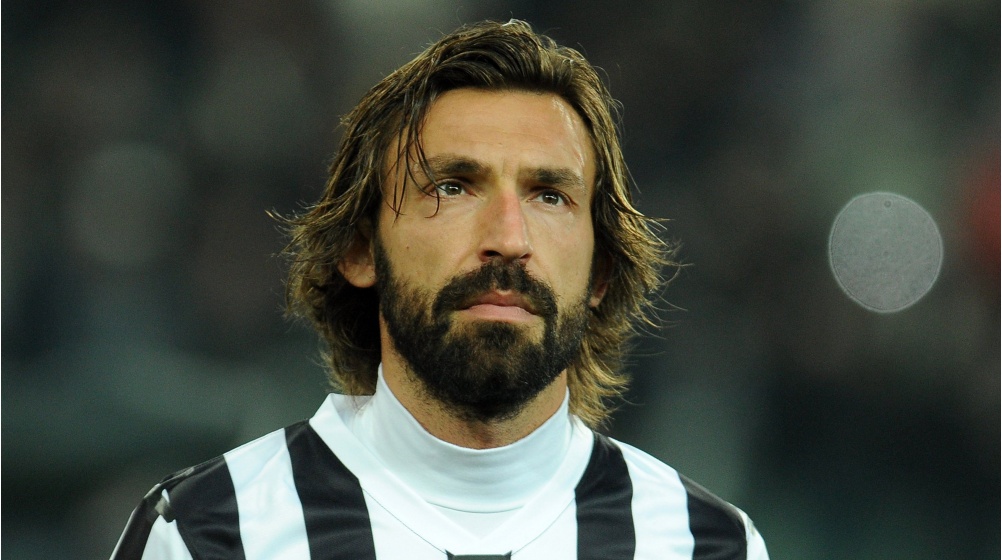
Andrea Pirlo: The Maestro of Modern Football
Andrea Pirlo, born on May 19, 1979, in Flero, Brescia, Italy, is widely regarded as one of the greatest midfielders of all time. Known for his vision, precise passing, and calm demeanor on the field, Pirlo earned the nickname “Il Maestro” for his ability to orchestrate play and dictate the tempo of the game.
Pirlo began his football journey at a young age, joining the youth academy of Brescia Calcio. His talent quickly became apparent, and he made his professional debut for the club at just 16 years old. His early career saw him play in an advanced midfield role, but his potential truly began to shine when he transitioned to a deeper playmaking position.
Rise to Prominence at Inter Milan and AC Milan
In 1998, Pirlo moved to Inter Milan, but it was at AC Milan where he truly made his mark. Joining the Rossoneri in 2001, he became a central figure in one of the most successful periods in the club’s history. Under the guidance of coaches like Carlo Ancelotti, Pirlo mastered the “regista” role, controlling the game’s rhythm from deep in the midfield.
During his time at AC Milan, Pirlo won two Serie A titles, two UEFA Champions League titles, and a Coppa Italia, among other honors. His partnership with fellow midfielders Gennaro Gattuso and Clarence Seedorf was key to Milan’s dominance in both domestic and European competitions.
Juventus and Continued Success
In 2011, Pirlo made a surprising move to Juventus on a free transfer. This transfer proved to be a masterstroke for the Bianconeri, as Pirlo played a pivotal role in revitalizing the team. His presence in midfield helped Juventus win four consecutive Serie A titles and reach the UEFA Champions League final in 2015.
Pirlo’s influence at Juventus extended beyond his technical abilities. His leadership and experience were invaluable to a squad that was rebuilding and aiming to reclaim its status as Italy’s top club.
International Career with Italy
Pirlo’s international career with Italy was equally illustrious. He earned 116 caps for the national team and was a key player in several major tournaments. His crowning achievement came in 2006 when Italy won the FIFA World Cup in Germany. Pirlo’s performances throughout the tournament were outstanding, and he was named the Man of the Match in the final against France.
In addition to the World Cup, Pirlo also represented Italy in three UEFA European Championships and two FIFA Confederations Cups. He was known for his composure under pressure, his ability to score crucial goals, and his exceptional free-kick prowess.
Coaching and Post-Retirement
After retiring as a player in 2017, Pirlo transitioned into coaching. In 2020, he was appointed as the head coach of Juventus. Although his tenure was brief and challenging, it demonstrated his commitment to football and his desire to contribute to the sport in new ways.
Legacy and Impact
Andrea Pirlo’s legacy is defined by his elegance, intelligence, and creativity on the pitch. He redefined the deep-lying playmaker role, inspiring a new generation of midfielders to value vision and technique over physicality. His ability to control games with his passing and his exceptional free-kick skills made him a unique and irreplaceable talent.
Honors and Recognition
Throughout his career, Pirlo received numerous individual awards and honors. He was included in the UEFA Team of the Year three times, named Serie A Player of the Year twice, and received the Pallone Azzurro as the best Italian player in 2012.
Andrea Pirlo’s influence on football is profound and lasting. His style of play, characterized by grace and intelligence, set him apart as one of the sport’s true maestros. As a player and now as a coach, Pirlo’s contributions to football continue to be celebrated by fans and players alike, solidifying his place among the greats of the game.